How to handle bodily fluids cleanup safely in Southlake during flu season
Flu season in Southlake means more vomit, blood, and diarrhea spills. Here is how to clean them safely, what disinfectants actually work, and when to call a pro.
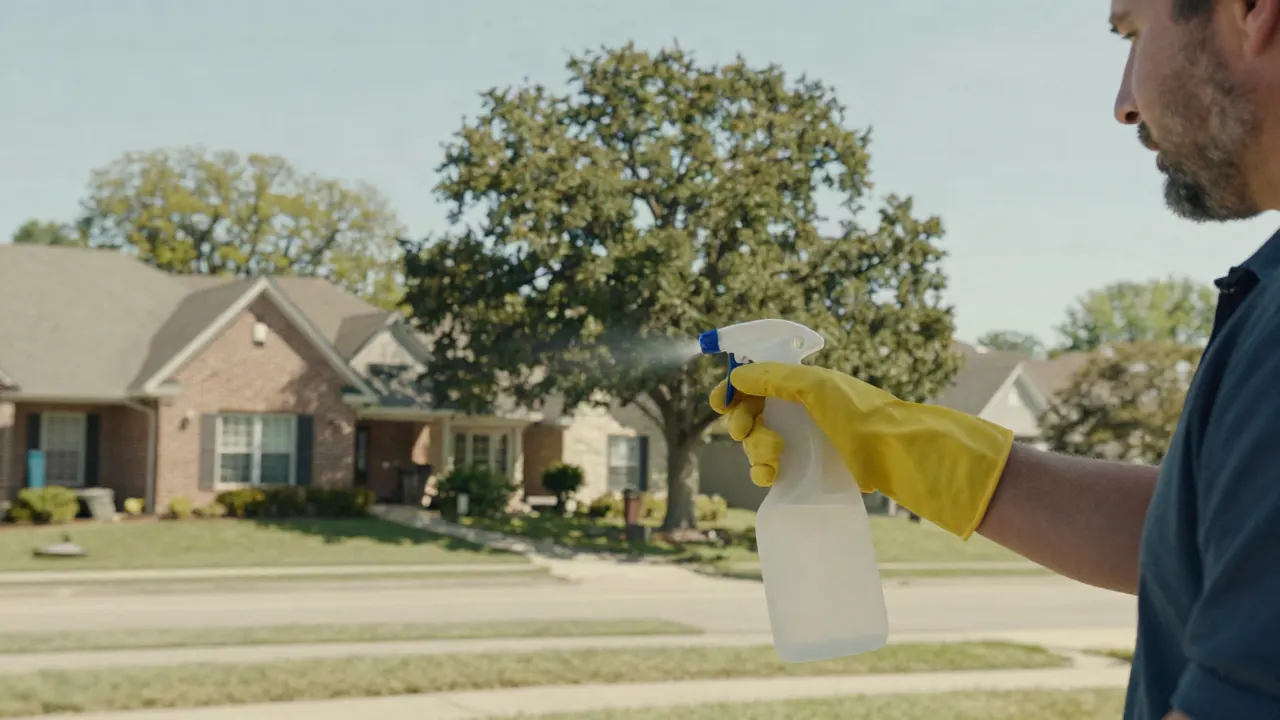
Handle bodily fluids cleanup safely in Southlake during flu season by treating every spill as infectious: wear nitrile gloves and eye protection, absorb the liquid with disposable towels, clean the surface with soap and water, then disinfect with an EPA-registered product and let it stay wet for the full contact time on the label. Flu viruses spread through respiratory droplets and contaminated surfaces, and a single vomit event can leave infectious particles across a 6-foot radius.
That is the short version. The rest of this post covers what to put on before you start, which disinfectants actually work on norovirus and influenza A, how long they need to sit, what to do with the waste, and the point at which a spill stops being a mop-and-bucket job. We run these calls across Southlake and the surrounding Mid-Cities, and the mistakes are almost always the same.
Why flu season makes bodily fluids cleanup in Southlake riskier
Flu season in Southlake runs roughly from late October through March, and the volume of vomit, diarrhea, and nosebleed calls we take from Carroll ISD families and Town Square offices climbs sharply in that window. Influenza A can survive on hard, non-porous surfaces for up to 48 hours, and norovirus - the usual culprit behind the stomach bugs that sweep through schools - can stay infectious on a countertop for days and resists many common cleaners.
Southlake homes make this worse in a specific way. The newer builds around Timarron and Carillon tend to have large open-plan kitchens and wide-plank engineered hardwood, and liquid from a spill on the second floor wicks under baseboards and into the subfloor within minutes. Once it is in the seams, surface wiping does nothing. We have pulled baseboards in homes off Dove Road where a child's flu accident three days earlier had already started to sour the drywall.
If you want the full scope of what we handle beyond a single spill, our Biohazard Cleanup in Southlake page covers everything from single-room disinfection to whole-home remediation after an illness runs through a household.
What you need before you touch anything
Before you touch a spill, put on the right gear and clear the room. Bodily fluids cleanup is a biohazard task, not a housekeeping task, and the difference is entirely in what you wear and what you throw away afterward.
- Nitrile gloves - not latex dish gloves. Two pairs if the spill is large.
- Eye protection and an N95 or KN95 if there is any chance of splashing or aerosolizing.
- Disposable gown or a trash bag with arm holes if you will be kneeling in it.
- Paper towels, absorbent pads, or kitty litter for the bulk liquid.
- EPA-registered disinfectant with a label claim for influenza A and norovirus.
- Two trash bags - one for waste, one to double-bag it.
Send kids and pets out of the room. Open a window. If the spill is on carpet, do not scrub - you will push the contamination deeper into the pad, and pad replacement is the only real fix once that happens.
How do I handle bodily fluids cleanup safely in Southlake during flu season?
You handle it in five ordered steps: contain, absorb, clean, disinfect, and dispose - and you never skip the clean step before the disinfect step. Disinfectant sprayed onto a protein-heavy spill is neutralized on contact and does almost nothing.
- Contain. Block off a 6-foot perimeter. Vomit and diarrhea splash further than people expect.
- Absorb. Lay paper towels or absorbent pads over the liquid and let them pull it up. Do not wipe outward - work from the outside edge inward so you are not spreading it.
- Clean. Wash the surface with warm water and dish soap. This removes the organic load that would otherwise kill your disinfectant.
- Disinfect. Apply the EPA-registered product and leave it visibly wet for the label's contact time - 1 minute for many influenza products, 5 to 10 minutes for norovirus claims.
- Dispose. Everything you used goes into a bag, that bag goes into a second bag, and it goes out with the trash. Gloves come off last, inside-out.
Wash your hands with soap and water for 20 seconds after the gloves come off. Hand sanitizer is not a substitute - it does not reliably kill norovirus.
What to use for bodily fluids cleanup in Southlake
Use an EPA-registered disinfectant with an explicit label claim for the pathogen you are worried about, and check the contact time before you buy it. The EPA's List N is the reference list for emerging viral pathogens, and the product label is the only thing that tells you how long the surface has to stay wet.
What works, in order of preference:
- Accelerated hydrogen peroxide products - fast contact times, low odor, safe on most hard surfaces.
- Quaternary ammonium wipes and liquids - good on influenza, weaker on norovirus unless the label says otherwise.
- Chlorine bleach at 1:10 dilution (roughly 5,000 ppm) - the old reliable for norovirus, but it bleaches fabric and corrodes metal if left on too long.
What does not work well enough on its own: vinegar, vodka, essential-oil sprays, and most "natural" all-purpose cleaners. They are fine for routine kitchen wiping. They are not a bodily fluids disinfection step.
For spills that have soaked into carpet, upholstery, or a mattress, surface products will not reach the contamination. That is a job for extraction and, often, pad replacement - the same process we use on Bodily Fluids Cleanup North Richland Hills TX calls where the spill has already gone below the surface.
Common mistakes we see on bodily fluids cleanup calls
The mistakes we see most often on bodily fluids cleanup calls are the ones that look like common sense and are actually wrong. Here is what to avoid.
- Vacuuming the spill. A standard vacuum aerosolizes infectious particles and contaminates the machine. Bagless vacuums are the worst offenders.
- Spraying disinfectant first. Organic material neutralizes the active ingredient. Clean first, always.
- Wiping in circles. You are re-contaminating the clean area with every pass. Work edge to center, then discard.
- Reusing the towel. One towel, one pass. Then it goes in the bag.
- Skipping the contact time. A wipe-down that dries in 15 seconds did not disinfect anything.
- Ignoring the soft surfaces. The couch cushion, the rug, the bed skirt. Flu and norovirus do not stay on the tile.
One more: do not wait. Influenza and norovirus are most transmissible in the first hours after a spill. A spill cleaned within 30 minutes is a very different risk profile than one that sat overnight.
When to call a professional for bodily fluids cleanup in Southlake
Call a professional when the spill has reached porous material, when it happened more than a few hours ago, when anyone in the home is immunocompromised, or when the volume is larger than a single towel can handle. Those are the four conditions where a DIY cleanup tends to leave contamination behind.
We get called most often for three situations: a stomach bug that ran through a household and soaked a mattress or sectional, a nosebleed or injury that left blood in carpet seams, and a spill in a rental or commercial space where the owner needs documentation that it was handled properly. Our team at BioNexa Services carries the extraction equipment, hospital-grade disinfectants, and disposal chain to handle all three.
If the spill involved blood specifically rather than vomit or diarrhea, the risk profile changes - bloodborne pathogens like hepatitis B and C require a different protocol. That is what our Blood Cleanup North Richland Hills TX service is built for.
Frequently Asked Questions
How do I handle bodily fluids cleanup safely in Southlake during flu season?
Wear nitrile gloves, eye protection, and a mask; absorb the liquid with disposable towels; wash the surface with soap and water; then disinfect with an EPA-registered product and leave it wet for the full label contact time - usually 1 to 10 minutes. Bag everything, double-bag it, and wash your hands for 20 seconds.
What precautions should I take for bodily fluids cleanup in Southlake TX?
Isolate the room, keep kids and pets out, and treat a 6-foot radius as contaminated. Do not vacuum, do not spray disinfectant before cleaning, and do not reuse towels. If the spill is on carpet or upholstery, assume the pad is contaminated and plan for extraction or replacement.
Is it safe to clean bodily fluids myself in Southlake?
Yes for small spills on hard, non-porous surfaces - under about a cup of liquid on tile, sealed wood, or laminate. It is not safe to DIY when the spill has soaked into carpet, a mattress, or drywall, when it is larger than a few cups, or when it has been sitting more than a few hours.
Who should I call for bodily fluids cleanup in Southlake TX?
Call a licensed biohazard remediation company. BioNexa Services handles bodily fluids cleanup across Southlake and the Mid-Cities, including extraction, disinfection, and disposal. We can usually be on site the same day.
How do I disinfect after bodily fluids cleanup in Southlake?
Use an EPA-registered disinfectant with a label claim for influenza A and norovirus, apply it to a visibly wet state, and let it sit for the full contact time - 1 minute for many flu products, 5 to 10 minutes for norovirus. Bleach at 1:10 dilution works but damages fabric and metal.
Get help with Biohazard Cleanup in North Richland Hills
If a spill has gone past what a mop and a bottle of bleach can fix, we will take it from here. BioNexa Services handles bodily fluids cleanup, disinfection, and disposal across North Richland Hills and the surrounding cities, with same-day response for most calls.
Call (713) 804-9653 and we will tell you on the phone whether it is a DIY job or one we need to come out for.