Why is my attic or crawlspace contaminated with animal waste in Hurst
Raccoons, squirrels, rats, and opossums get into Hurst attics and crawlspaces through gaps you can't see. Here's why it happens, what it costs to fix, and how to stop it.
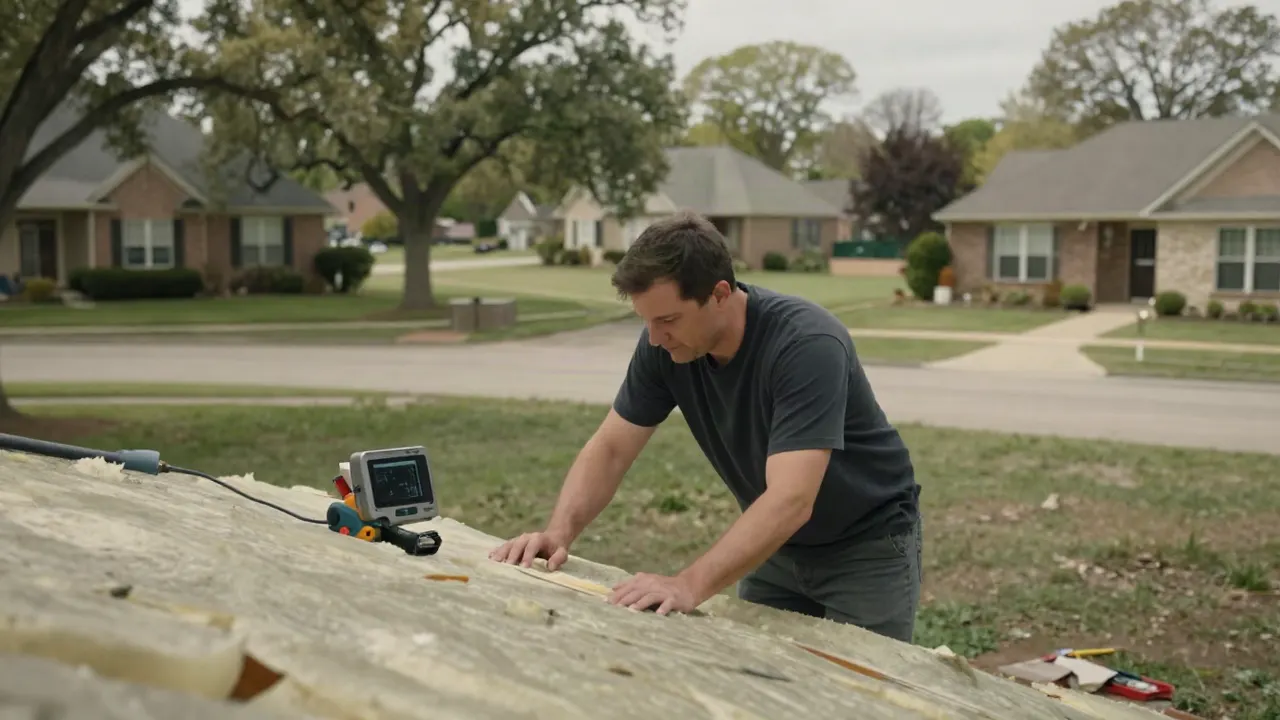
Your attic or crawlspace is contaminated with animal waste because something got in through a gap the size of a quarter and stayed - Hurst's tree canopy, pier-and-beam foundations, and mild winters give raccoons, squirrels, rats, and opossums an easy year-round home. The waste itself is the symptom, not the problem. The entry point, the moisture, and the nesting material are what keep animals coming back.
We handle attic and crawlspace contamination across Hurst and the surrounding Mid-Cities every week, and the pattern is almost always the same: a small roof or foundation gap, a warm deck of insulation, and six months of droppings before anyone notices the smell. This post covers why it happens in Hurst specifically, what the health risks really are, what cleanup costs in 2026, and how to keep it from happening again.
Why is my attic or crawlspace contaminated with animal waste in Hurst
Attic or crawlspace animal waste contamination in Hurst TX is the buildup of urine, feces, and nesting debris left behind when wildlife lives inside a home's unfinished spaces for weeks or months. It's a biohazard problem, not a pest problem, because the waste carries pathogens and ammonia that soak into insulation, wood, and ductwork.
Hurst sits in a pocket of Tarrant County where three things line up badly for homeowners. First, the tree canopy - post oaks, pecans, and mature elms - gives squirrels and raccoons direct highway access to rooflines. Second, a large share of Hurst housing stock was built between the late 1960s and the 1990s, which means original soffit vents, gable vents, and pier-and-beam crawlspaces that have had decades to rot, warp, and open up. Third, winters here rarely drop below freezing long enough to kill off a raccoon litter, so animals breed year-round instead of seasonally.
Put those together and you get a city where a squirrel can chew a 2-inch hole in a fascia board in a single afternoon and a raccoon can pull a soffit vent loose with its hands. Once inside, they pick a corner, urinate in the same spot every day, and the insulation underneath becomes a saturated biohazard mat.
The Hurst homes most likely to have this problem
Not every Hurst house is equally vulnerable. In our experience, four categories show up over and over.
- Pier-and-beam homes with open crawlspace vents - the classic 1960s-1980s Hurst build. Vents are supposed to be screened; after 40 years, most aren't.
- Homes with mature pecan or oak trees within 15 feet of the roofline. Squirrels use branches as bridges and don't need to touch the ground.
- Houses with original wood fascia and soffit. Rotted wood is soft enough that a raccoon can tear it by hand.
- Homes with HVAC flex duct in the attic. Rodents chew the duct jacket for nesting material, then the attic air handler pulls attic air - and attic odors - into the living space.
If you're in one of the older neighborhoods near Biohazard Cleanup in Hurst, you're in the highest-risk band. We also see the same pattern in neighboring Biohazard Cleanup in Bedford and Biohazard Cleanup in Euless, where the housing stock and tree cover are similar.
How animals actually get in
Animals don't need an open door. They need a gap, and Hurst homes have more gaps than most homeowners realize.
Attic entry points
- Loose or missing soffit vents (raccoons pull these off by hand)
- Gable vents with torn screens
- Roof-to-fascia gaps where the drip edge has pulled away
- Plumbing vent stacks and HVAC line penetrations with no collar
- Chimney flashing gaps - a favorite for squirrels
- Ridge vents with damaged shingles after a hail event
Crawlspace entry points
- Open foundation vents with rusted or missing screens
- Gaps around plumbing and gas line penetrations
- Deteriorated pier-and-beam skirting
- Cracks in the foundation wall wider than 1/4 inch
- Unsealed access hatches
A rat needs 1/2 inch. A mouse needs 1/4 inch. A squirrel needs about 1.5 inches. A raccoon needs 3 to 4 inches, and it will make that hole itself if the wood is soft. That's why the first thing we do on any job is walk the exterior and find the actual entry - cleaning without sealing is a waste of money.
Health risks of animal waste in your attic or crawlspace
The health risks of animal waste in an attic in Hurst are real and they don't require you to touch anything. Airborne spores and dried urine particles move through the house every time the HVAC runs.
The three we worry about most:
- Hantavirus - carried by deer mice and spread through dried urine and droppings. It's rare in Texas but serious, and it becomes airborne when contaminated material is swept or vacuumed with a shop vac.
- Leptospirosis - a bacterial infection from rodent and raccoon urine. It gets into the body through cuts, eyes, or the mouth. In a crawlspace, standing water mixed with urine is the classic vector.
- Histoplasmosis - a fungal infection from soil enriched with bird and bat droppings. Attic and crawlspace dust is the primary exposure route in homes.
Beyond the pathogens, raccoon latrines carry roundworm eggs (Baylisascaris) that survive in soil for years. Ammonia from concentrated urine corrodes copper wiring, HVAC coils, and metal ductwork. And the smell - that sharp, musty, animal odor - is the last thing to leave and the first thing guests notice.
How to clean animal waste from your attic in Hurst TX
How to clean animal waste from an attic in Hurst TX comes down to four steps: remove the animals, remove the contaminated material, treat the surfaces, and seal the entry points. Skipping any one of them means the problem comes back.
- Exclusion first. Animals have to be out before anyone works in the space. In Texas, raccoons and most squirrels are protected, so removal has to be done legally - one-way doors, not traps in the attic.
- Remove contaminated insulation. Blown-in fiberglass or cellulose that has been soaked with urine can't be cleaned. It gets bagged, sealed, and hauled out.
- Treat the wood and framing. We apply an EPA-registered disinfectant to every exposed surface - rafters, decking, top plates, and ductwork exteriors. This is where a lot of DIY jobs fail: spraying bleach on visible stains doesn't reach the urine that soaked into the wood grain.
- Seal and re-insulate. Every gap we found on the exterior walk gets sealed with hardware cloth, metal flashing, or foam. Then new insulation goes in.
For crawlspaces, the process is similar but adds a vapor barrier and a moisture check. Crawlspace animal waste in Hurst almost always comes with elevated humidity, and wet wood is what turns a one-time problem into a recurring one. Our team handles this as part of our Feces & Urine Cleanup North Richland Hills TX service, which covers both the waste removal and the surface treatment.
What attic animal waste cleanup costs in Hurst TX
Typical 2026 pricing for attic animal waste cleanup in Hurst TX runs $1,200 to $4,500 for most single-family homes, with crawlspace-only jobs starting around $900 and large attic jobs with full insulation replacement reaching $6,000 or more.
What drives the number:
- Square footage of contaminated area. A 200-square-foot corner is a different job than a full 1,400-square-foot attic.
- Insulation type. Blown-in cellulose is cheaper to remove than batt or spray foam.
- Severity. A single raccoon latrine is one thing; a multi-year squirrel colony is another.
- Odor treatment. If the smell has soaked into drywall or ductwork, hydroxyl or ozone treatment adds $300-$900.
- Exclusion work. Sealing entry points runs $400-$1,200 depending on how many gaps and how high they are.
If you're comparing quotes, ask what's included. A $700 quote that skips insulation removal and surface treatment isn't cheaper - it's incomplete, and the smell will be back in a month.
Common mistakes homeowners make
The mistakes we see most often are the ones that make the problem worse or more expensive.
- Using a shop vac on dry droppings. This aerosolizes hantavirus and histoplasma spores. If you have to work in the space, wear a P100 respirator and wet the material down first.
- Bleach on everything. Household bleach doesn't penetrate wood and evaporates before it kills much. It also corrodes metal ductwork and wiring.
- Sealing the entry before the animals are out. You'll trap them inside, and they'll tear a new hole within days.
- Replacing insulation without treating the framing. New insulation on contaminated wood just absorbs the same odor.
- Ignoring the HVAC. If the air handler is in the attic, contaminated air has been cycling through your house for months. Ducts need to be cleaned or replaced.
- Assuming the smell will fade. It won't. Urine salts stay in wood indefinitely until they're chemically neutralized.
One more: don't hire a pest control company to do biohazard cleanup, and don't hire a biohazard company to do wildlife removal. You need both, and the order matters.
When to call a professional
Call a professional when the contamination covers more than a few square feet, when the smell has reached the living space, or when you can't identify the entry point. Those three conditions are the line between a weekend project and a biohazard job.
We handle this work every day. BioNexa Services is a licensed and insured biohazard remediation company serving Hurst and the surrounding Mid-Cities, and we handle the full scope: wildlife exclusion coordination, contaminated material removal, EPA-registered disinfection, odor treatment, and re-insulation. You get one team, one price, and a clear answer on what's contaminated and what isn't. We walk the property, find the entry points, and tell you exactly what it will cost before we start.
If your attic or crawlspace is part of a larger remediation - hoarding, a sewage backup, or an unattended situation - we handle that too through our Biohazard Cleanup North Richland Hills TX service line.
How to prevent animal waste in your crawlspace and attic
Prevention is cheaper than remediation by a factor of five or more. Here's what actually works in Hurst.
- Walk the exterior twice a year - once in late fall before the cold snap, once in early spring before litters. Look for gaps at the roofline, soffit, and foundation.
- Trim tree limbs back 6 to 8 feet from the roof. This is the single highest-impact fix for squirrel problems.
- Screen every foundation vent with 1/4-inch hardware cloth, not chicken wire. Rodents chew through chicken wire.
- Cap the chimney with a stainless spark arrestor and screen.
- Seal plumbing and HVAC penetrations with copper mesh and expanding foam.
- Keep crawlspace humidity below 60%. A $40 hygrometer and a $300 dehumidifier will save you thousands.
- Fix roof leaks immediately. Wet wood is soft wood, and soft wood is an open invitation.
If you're in a neighborhood with heavy tree cover - the older pockets of Hurst, or over in Biohazard Cleanup in Richland Hills - annual inspections are worth the cost. We offer a free attic and crawlspace assessment with every cleanup quote.
Frequently Asked Questions
Why is my attic or crawlspace contaminated with animal waste in Hurst?
Animals get in through gaps as small as 1/4 inch - usually rotted fascia, unscreened foundation vents, or loose soffit panels. Hurst's mature tree canopy and mild winters let raccoons, squirrels, and rats live in attics and crawlspaces year-round instead of seasonally.
How do I clean animal waste from my attic in Hurst TX?
Remove the animals first, then remove contaminated insulation, treat all wood surfaces with an EPA-registered disinfectant, and seal every entry point. Most jobs take 1 to 3 days. Never dry-sweep or shop-vac droppings - that aerosolizes hantavirus spores.
Is animal waste in crawlspace dangerous in Hurst?
Yes. Crawlspace waste carries leptospirosis, hantavirus, and histoplasmosis risk, and the ammonia corrodes wiring and ductwork. If the crawlspace stays humid - common in Hurst's pier-and-beam homes - the contamination spreads faster and the smell reaches the living space within weeks.
Who should I call for attic animal waste cleanup in Hurst TX?
Call a licensed biohazard remediation company, not a pest control operator. You need both - wildlife exclusion to get the animals out, and biohazard cleanup to remove the waste, disinfect the surfaces, and treat the odor. BioNexa Services handles both scopes in Hurst.
How much does animal waste cleanup cost in Hurst?
Most attic jobs run $1,200 to $4,500 in 2026. Crawlspace-only jobs start around $900. Full attic jobs with insulation replacement and odor treatment can reach $6,000. The price depends on square footage, insulation type, and how long the animals were there.
Get help with Biohazard Cleanup in North Richland Hills
If you've found droppings in your attic or crawlspace, don't wait for the smell to reach the living room - the longer the waste sits, the deeper it soaks into wood and insulation, and the more it costs to fix. We serve Hurst, North Richland Hills, and the surrounding Mid-Cities with same-week scheduling and upfront pricing.
Call BioNexa Services at (713) 804-9653 for a free attic and crawlspace assessment. We'll find the entry points, tell you exactly what's contaminated, and give you a written price before we start.